 hun
hun eng
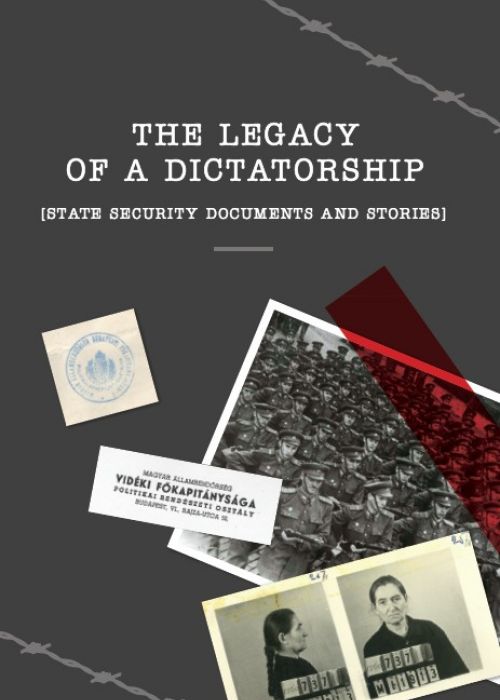
engThe legacy of a dictatorship (State security documents and stories)
ár: - Ft
During the Cold War, the countries of the Soviet Bloc, as a result of the change in the political system in 1990, freed themselves from the influence of the Soviet Union and the communist system. This also meant that the history of the dictatorship and the crimes of the regime could be confronted. The secret services and state security services played a decisive role in the implementation of communist power, and familiarity with the documents they produced is essential for unravelling the history of the period. Archives have therefore been set up in most former socialist countries to allow research into secret service records. In Hungary, the Historical Archives of the Hungarian State Security (ABTL) fulfils this role. The Historical Archives of the Hungarian State Security is a specialised state archive founded in 1997. Its main function is the study and presentation of the history of the secret services before 1990, as well as the provision of individual and collective information compensation to citizens and society, respectively, enabling victims and those who were
under surveillance to consult the documents relating to them. Following World War II Hungary became part of the Soviet Union’s sphere of interest. From 1945, the communist dictatorship was gradually established.
After World War II, the Hungarian communists, relying on the Soviet army, gradually ousted their political opponents from power, using electoral fraud and show trials. An important goal of this exhibition is to demonstrate to people how the political police of the communist dictatorship worked, while the broader purpose of the exhibition and community space is to present the documents held in the Archives to the public at large. These documents relate to the investigations carried out against persons under surveillance and those persecuted for political reasons. It is widely believed that the Archives are essentially a repository of documents that are rarely of great interest, however, the stories they tell are fascinating, often deeply moving, and certainly important in order to understand the past. The Archives provide visitors with the most comprehensive picture possible of the operation and records of state security, whether they spend a shorter or longer period of time here. The exhibition includes a number of interactive elements, such as pull-out drawers and audio material, which contribute to revealing new layers in the history of state security. The permanent exhibition presents the operation of the political police between 1945 and 1990 through specific historical events, focusing on the documents and using objects from the Archives. The operation of the state security apparatus can be followed through six thematic units: in the white zone, the target group to be kept under control, i.e. the forms of social resistance; in the black zone, the methods and areas of violence and reprisal; in the grey zone, the methods of secret investigations; the network of agents, the secret surveillance methods, the organisation of power-enforcement and its leaders. The types of documents produced during the operation of state security are displayed in the middle of the exhibition.
Edited by: Tóth Eszter
Historical Archives of the Hungarian State Security
Budapest, 2021